Deciding on the right Mobile Elevating Work Platform (MEWP) for your project is important. It is crucial that you understand the differences between the two most popular options – Boom lift vs Scissor lift. Each lift style has advantages and disadvantages based on specific requirements. This guide will compare both styles of lifts, helping you determine the best way to decide on each and highlighting important MEWP guidelines for safe use.
Boom Lift vs Scissor Lift | Key Differences
Before looking at the differences, it is important to understand that both scissor lifts and boom lifts offer distinct advantages. By understanding these differences, you can choose the right lift style while following MEWP guidelines to ensure safe operation and optimal performance.
Range of Motion
Boom Lift: Provides both vertical and horizontal reach, perfect for reaching difficult areas or working over obstacles.
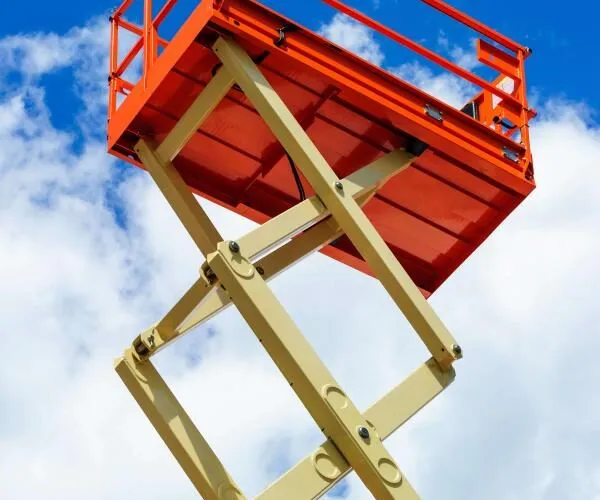
Scissor Lift: Only offers vertical movement, ideal for stable, direct-up tasks with no need for horizontal reach.
Height and Reach
Boom Lift: Reaching up to 185ft, making them ideal for large-scale tasks when at height.
Scissor Lift: Reaching up to 20-60ft, making them ideal for smaller height requirements.
Size and Maneuverability
Boom Lift: Larger and require more space when providing flexible positioning
Scissor Lift: Compact and manoeuvrable, making them ideal for tight indoor areas.
Applications
Understanding the specific applications of boom lifts and scissor lifts is important for selecting the correct MEWP for your project. Below, you can find some examples of each:
Boom Lift Applications
- Construction and Building Maintenance: Used for tasks such as installing steel beams and working on high buildings.
- Roofing and Exterior Building Work: Providing roof installation and repairs access.
- Event: Used for setting up stages, lighting and banners.g up stages, lighting and banners.
Scissor Lift Applications
- Construction Projects: Ideal for framing and putting materials together.
- Manufacturing and Warehousing: Ideal for reaching a certain height and assembly line work.
- Facility Maintenance: Used for cleaning windows, changing lights and regular maintenance.
When To Choose Each Type Of Lift
Understanding the boom lift vs scissor lift comparison can help you decide which lift is right for your project. Here are some scenarios where one might be a better choice.
When To Use A Boom Lift
- You need to reach difficult areas or work over obstacles.
- Your project requires working above 60ft in height.
- Your project is outdoors on uneven surfaces.
When To Use A Scissor Lift
- You need a stable vertical lift in small and indoor areas.
- The work area is on a smooth and even ground.
- You need a stable platform for lifting equipment.
Safety Considerations
Following MEWP guidelines is important for safe use and accident prevention. Workers must be correctly trained and certified, whether using a boom or scissor lift. Always check the equipment before use to confirm it is all in good working condition.
When comparing boom lifts vs scissor lifts, always follow the manufacturer’s guidelines, including correct positioning and adhering to weight limits. To ensure the highest safety, wear the required helmets, harnesses, and gloves. For more information, visit our training page.
Selecting the right lift comes down to understanding the differences between boom lifts vs scissor lifts and how they align with your project needs. Boom lifts provide greater height and flexibility, while scissor lifts offer stability for vertical projects.
No matter what lift you choose, always follow MEWP guidelines to allow a safe and efficient experience. Correct training, equipment checks, and compliance with manufacturer’s recommendations are important for overall workplace safety.