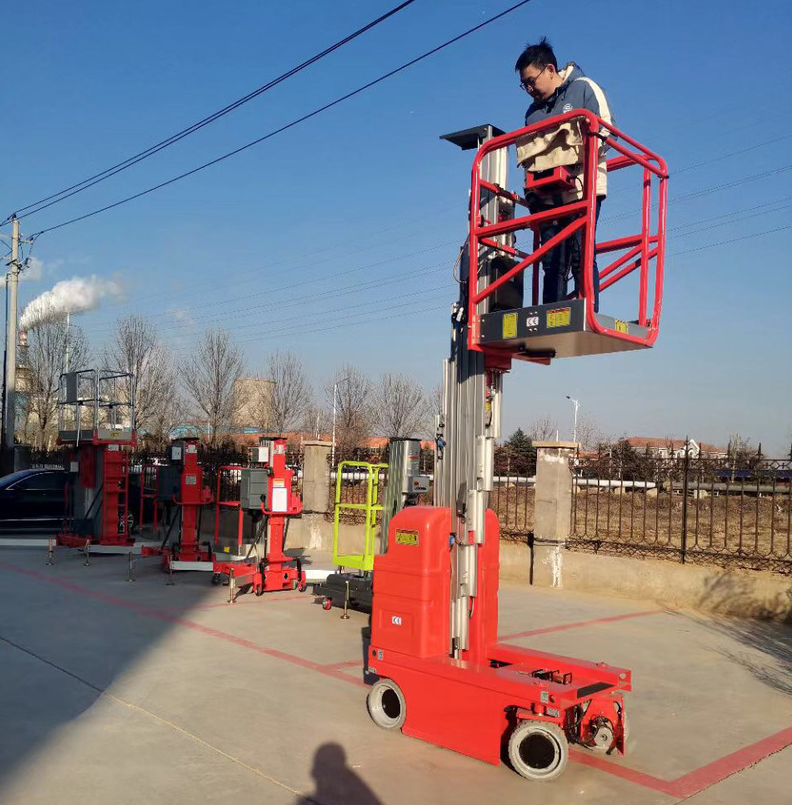
In Toledo, Spain, Elena — the municipal maintenance manager — faced a recurring headache: every festival the town square needed strings of lights, set pieces, or repairs to the old bridge lamps, and her team always struggled with moving heavy equipment, blocking streets, and erecting temporary scaffolding. The paved surfaces were fragile, heavy machinery left marks, and narrow lanes prevented large lifting vehicles from getting in, making the work slow and disruptive.
At a trade show, Elena spotted an aluminum alloy lift. It was lightweight, foldable, easy to handle, and transportable in a small truck; the aluminum resisted corrosion, making it suitable for outdoor long-term use. After talking with the supplier and seeing a live demo, she decided to rent one for a week of festival installations.
The result exceeded expectations. The lift navigated narrow alleys, safely hoisted lighting technicians and tools, and the platform fit two operators plus required equipment. Compared with building scaffolding, a single job went from a half-day to under two hours, and street disruption was minimal. Crucially, because the machine was light, it exerted low pressure on the paving and left almost no marks.
Elena commented:
“This aluminum alloy lift made our festival setups fast and dignified. It’s compact yet stable, and it truly solved the three big problems of access, load, and pavement damage.”
Why an aluminum alloy lift fits these scenarios
-
Light and portable: easy to load and move for short distances.
-
Corrosion resistant and durable: suitable for coastal or humid environments.
-
Pavement friendly: lower contact pressure reduces damage to paved surfaces.
-
Quick deployment: fast to set up, shortening preparation time.
Brief maintenance tips (must-do)
-
Regularly inspect rivets/welds and protective coating;
-
Follow the manual for checks on the hydraulic system, battery, and control buttons;
-
Keep the platform and guide rails clean to prevent debris jamming.