A municipal case study showing faster setups, less pavement damage, and safer work at height.
In a coastal Portuguese town famed for its narrow cobbled streets and centuries-old plazas, the municipal works team faced a stubborn problem every festival season: hanging lights, repairing street lamps, and decorating historic façades without damaging the delicate paving or blocking traffic. Heavy machinery left scuff marks on the stone; scaffolding took days to erect and disrupted shops and cafés. The team needed a solution that was light, fast, and gentle on old surfaces.
The municipal maintenance manager, Ana, discovered an aluminum alloy lift after seeing a compact demo at a regional public-works fair. The lift’s combination of a lightweight frame, compact folded footprint, and corrosion-resistant finish seemed to match the town’s constraints perfectly. After arranging a one-week rental for the annual midsummer celebration, the unit was shipped and deployed to the town square.
Why the aluminum alloy lift was a fit
Aluminum alloy construction makes the machine significantly lighter than steel alternatives, allowing:
-
Easier transport and manual positioning with a small van.
-
Lower contact pressure on cobbles and paving, minimizing surface damage.
-
Rapid setup and teardown that caused minimal disruption to pedestrian flow.
-
Natural corrosion resistance for seaside conditions.
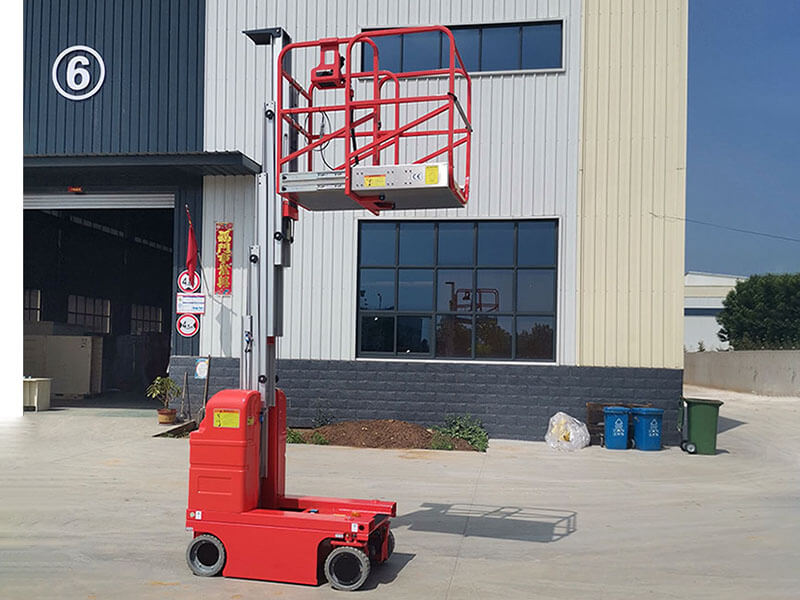
The model used had a foldable mast and narrow chassis, a stable platform large enough for two technicians and tools, and an easy joystick control system. Outriggers provided extra stability where needed, yet the overall footprint remained small.
On-site results (first week)
The lift’s impact was immediate and measurable:
-
Setup time per task dropped from an average of 3–4 hours (scaffolding) to under 90 minutes.
-
Street closures were reduced to short rolling operations instead of full-day shutdowns.
-
Pavement damage reports fell to zero — the lighter machine left no discernible marks.
-
Crew requirement shrank: tasks that needed four people with scaffolding were completed with two (operator + technician).
Ana summed up the change:
“The aluminum lift let us work quickly and respectfully in the heart of the old town. We kept businesses open, avoided costly repairs to the paving, and finished well ahead of schedule.”
Quick operator & maintenance notes
-
Operators appreciated the simple controls and compact transportability; a 30-minute familiarization was enough for most crews.
-
Daily checks focused on battery charge (or fuel), clean contact points, and visual inspection of welds and fasteners.
-
Because aluminum resists rust, coastal maintenance is simpler — still, seals, hydraulics, and moving parts require regular lubrication and inspection per the manual.
Conclusion
For towns, historic sites, and venues where surface preservation, tight access, and fast turnaround matter, aluminum alloy lifts offer a practical, cost-effective alternative to heavy cranes and time-consuming scaffolds. In this case, a small equipment change delivered big benefits: safer crews, happier businesses, and preserved pavement.
Interested in a demo or a short-term rental to test an aluminum alloy lift in your own environment? Contact us to discuss models, availability, and on-site trials.